How an Occupational Therapist Practice 2X’ed Their Business & Dominated Their Niche
https://www.functionalpelvis.com
How can we expand our online training business to become the go-to destination for occupational therapists who want to specialise in pelvic health?
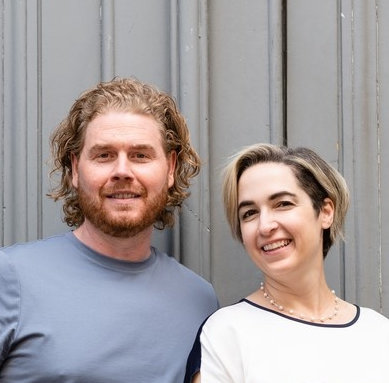
That was Lindsey and Doug Vestal’s goal when they contacted me in November 2024.
This case study shows how their business changed during the following year.
Watch the full video here…
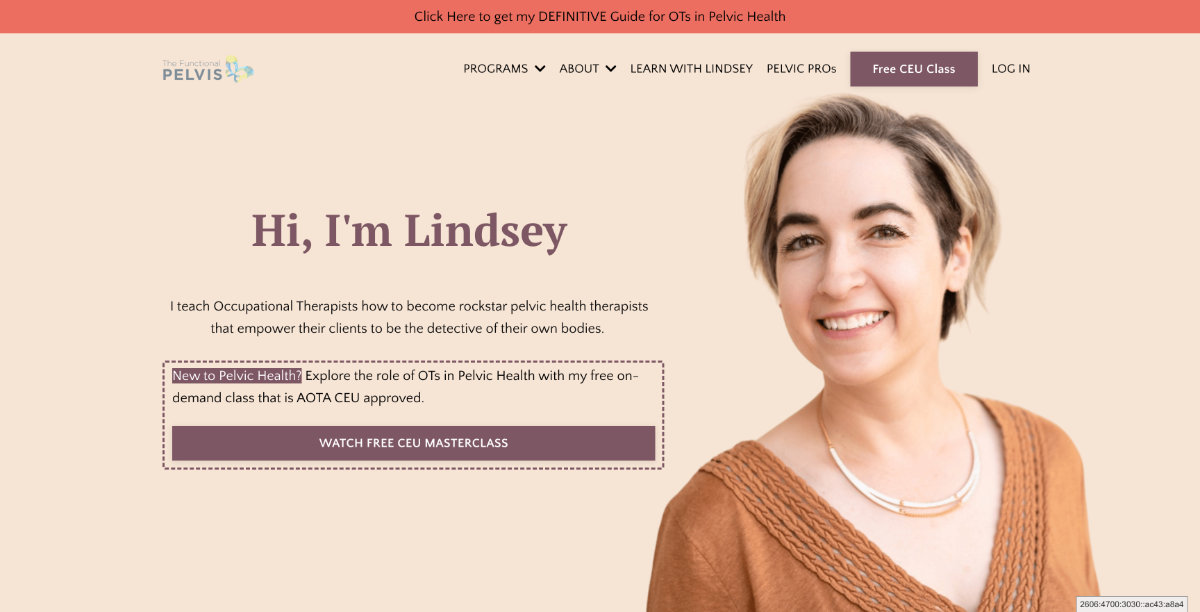
Lindsey Vestal is an experienced occupational therapist with an expertise in pelvic health.
This is an area of health largely dominated by physical therapists, but Lindsey passionately believes OTs have a critical role to play in the area.
“My private practice and background has been in providing pelvic health services, and it is an incredible joy and pleasure to be able to help other occupational therapists step into this incredibly fulfilling role that dramatically impacts our clients’ quality of life.”
So, in 2018, she and Doug pivoted their business from private patient consultations and founded The Functional Pelvis to teach other occupational therapists the skills they needed to work in pelvic health.
When I first met Lindsey and Doug in late 2024, they had a busy online business, offering courses, live events and more.
As demand had grown, they’d added products bit by bit, with no real plan in place. That created confusion for students — and left Lindsey and Doug with no time or energy to visualise how their business might change and grow.
“Back in 2024, we just had very distinct, separate products. I think a lot of course creators start like this… it just happened very organically over 7 years. We just started adding on different products and the business grew from there.”
I see this problem with many educator businesses.
They’re so busy growing and adding what they think students need they don’t have time to wonder if their offerings are actually in line with what prospective students are looking for.
But it’s vital to take a step back, look at your education ecosystem and ask some penetrating questions.
In Lindsey and Doug’s case, these were:
- What their OT students really needed
- How to demonstrate their unique position in pelvic health education
- Growing the business to improve the pathway into pelvic health for more OTs
Here’s some background…
THE BUSINESS
When we started working together, the business had a number of obstacles that I noticed standing in the way…
1. Students didn’t have a straightforward path to success
I began by asking:
“So what do you sell? What do you offer? What’s the journey you take students on?”
The reality: 10 or 12 different programmes.
There was a lot going on.
(Typical for a new education business that grows by “addition”.)
So, I put myself in the shoes of an occupational therapist wanting to retrain, coming across Lindsey’s business and looking at the main offerings. What does retraining look like at a simple level?
The journey, as laid out on The Functional Pelvis, wasn’t clear to me.
There was no path to lead complete beginners towards certification. Rather a “smorgasbord of options”.
And so, with so many choices, OTs looking for Continuing Education Units (CEU) saw them as a place to ‘dip into’ on the journey rather than a go-to destination.
As Lindsey explains:
“OTs were piecemealing all of their CEU credits here and there, and The Functional Pelvis was just one small part of that.”
2. Lindsey was ‘blinded’ by her own experience
A decade ago, Lindsey herself had no clear route into the pelvic health world as an Occupational Therapist.
As she says…
“When I got into the pelvic health field, I couldn’t find any courses for me to learn from. People even told me I couldn’t enter the field!
But when I heard that, I became determined. I thought, ‘I’m going to do it, and I’m going to do it 10 times faster!’“
Lindsey had to figure out the training pathway herself.
It was a scrappy journey, cobbling together training from different sources.
So, when she started her own training business, she resisted created a “conventional” pathway. Instead, she wanted to offer different options for people to choose from… just like her training had been.
As a result, she ended up building a “Frankenstein” model of different programmes, with no clear pathway.
“I didn’t think most people needed rules or structure. I didn’t want to force people to conform to a predetermined structure. I thought I’d be putting up blocks. “
I call this the Expertise Trap — getting so caught up in our own knowledge that we fail to step back and see things from the perspective of the average student.
See, most students don’t want to forge their own path, researching everything themselves.
Most students want a clear, simple path laid out for them to follow, guided by an expert they can trust.
Insight From Olly:
It was clear to me that Lindsey was passionate about getting more OTs into pelvic health and was incredibly hands-on with her students. Yet, for all her expertise — or perhaps because of it — she didn’t understand the journey they needed to go through.
Lindsey’s by no means the first expert to fall into this trap – the Expertise Trap. Perhaps you recognise yourself in her dilemma?
Sometimes we are too close to our area of expertise. It’s really hard to look at something you know so well — to step back from your own journey and see with the eyes of a newbie.
3. Stretched to capacity
Lindsey and Doug were offering so many distinct products it left them no time to think differently.
In other words, they were so busy working inside the business on the day-to-day tasks, they couldn’t step out to work on the business and reimagine what it could become.
THE WORK
Let’s summarise:
- Lindsey has years of experience as an OT specialising in pelvic health, so she knows this specialty inside out.
- She’s a pioneer in the field, which meant forging her own educational journey.
- That created her belief that presenting OTs with a well-defined path would put unnecessary obstacles in their way.
- By 2024, Lindsey was teaching her expertise somewhat haphazardly, offering many distinct products, but didn’t give students a coherent journey or goal.
- OTs saw the business as just one piece of the CEU puzzle.
- They were flat out in the business, leaving them little time or energy to see beyond their day-to-day tasks.
So, we needed to:
- Reveal and remove move the beliefs that created Lindsey’s blind spot.
- Understand what students actually needed and wanted.
- Create a track that guides OTs on a logical journey, from complete beginner to certification.
- Free up time for Lindsey and Doug to step back a little.
Lindsey and Doug desperately wanted to help many more occupational therapists into the pelvic health field.
“I truly believe occupational therapists are leaders in this field because of our marriage of mental health and physical abilities. Being able to address the pelvic floor from that perspective really is a dream from a client’s perspective.“
Here’s how we tackled each challenge to help them achieve that goal.
1. Uncovering Lindsey’s Blind Spot
Lindsey had to recognise her blindspot about what today’s OTs require from her programmes.
To do that, she needed to step away from her expertise and see through the eyes of a “newbie” — something that’s incredibly hard for experts to do.It meant, as she puts it, “getting out of my own way.” Being asked hard, revealing questions and “being in the right place to hear them.”
“I’ve been doing this for so long. I’m surrounded by these students. I host live events. I teach online.
Because I am an OT, I know. OTs. But I think sometimes it really takes working with someone that can ask the right questions, and you yourself have to be in the right place to hear them.“
It’s incredibly hard to step back from your life’s work and take a realistic, outsider’s view.
But by consciously stepping outside of her own story, Lindsey could recognise that OTs today want a structured route to success, and the reassurance that their financial outlay will be money well spent.
“I think by starting to work with you, we were ready to entertain those questions, to look at things differently.
It’s scary because you think, oh, I have success. I’m able to pay my bills. Well, what if you could do and make a better impact if you take a step back and look at it with fresh eyes?”
2. Created a Logical Student Journey
When prospective students explored their website, they couldn’t see an obvious route towards becoming a certified pelvic health OT. This made it hard for them to commit.
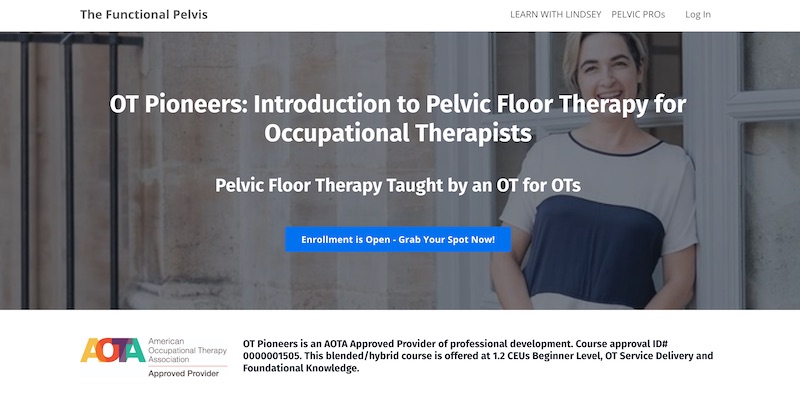
So we decided to completely restructure the primary offering, from a short course into a “complete training pathway”.
This way it was a “one stop shop” for OTs wanting to retrain, and showed a clearly defined progression for students to advance.
They gave themselves just two months to completely rebuild the Level 1 course from a short, two-week taster into a deeper 4-month-long programme.
As Doug explains:
“We greatly expanded the amount of contact hours Lindsey has with her students, which is one of the reasons why they’re getting such great results. They’re getting even more training and there’s nothing else that’s this comprehensive out there.”
3. Recruited Staff From Within Their Community
To expand their capacity, and enable Lindsey to give her students more contact hours, Doug and Lindsey needed to hire some teaching assistants (TA).
So, they reached out to former students and brought on several TAs.
This approach enabled them to
- Sell more places in the programme and
- Step back a little and gain some much-needed free time
Insight From Olly:
When you’re growing an education business, hiring from within your audience can be a powerful strategy.
People who’ve already gone through your programmes are invested in your work and understand the transformation you’re trying to create.
That’s exactly what Doug and Lindsay did when they brought on teaching assistants from their previous cohorts. These weren’t random hires – they were people who already knew “how things are done” at The Functional Pelvis.
If you’re considering growing your team, ask: “Who in my existing community already “gets it” at a deep level?“
Former clients or students often make some of the strongest hires because they don’t just know your content; they understand your mission and can represent it with confidence.
RESULTS
When we first began working together, Lindsey and Doug wanted to include more OTs in their programmes. But with so much already going on, and Lindsey doing all the teaching herself, they couldn’t see how or where the business could grow.
What’s more, they offered so many products it left OTs feeling confused. Without a reassuring map to success students tended to dip into programmes, spreading their CEUs across several businesses.
So they:
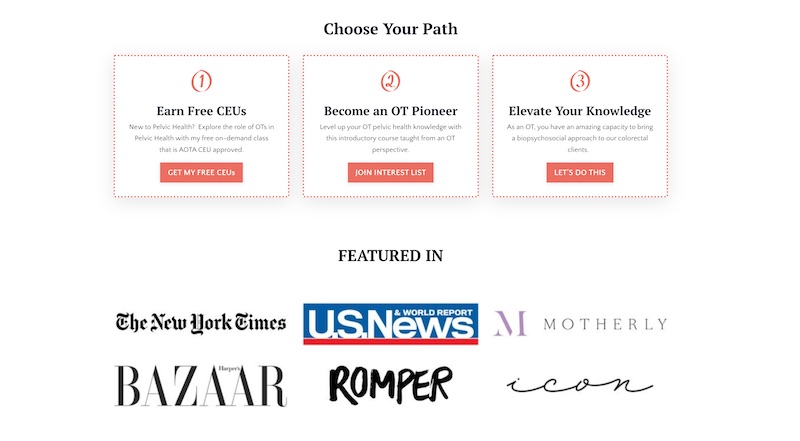
- Consolidated their scattered programmes into a clearly defined progression: Level 1 → Level 2 → ultimate certification.
- Designed the path to take an OT from complete newbie to certified without leaving The Functional Pelvis.
Reworking the Level 1 course gave their students the confidence to commit to the whole Functional Pelvis programme.
“After running that first cohort, we had record enrolments for our programme because I think the path was just so incredibly clear.”
They had created an incredibly attractive offer to supply what OTs really wanted and needed.
“The offer was just so great!
Like, wait a minute, I can go from a self-paced online course to joining a big community (which is very big for OTs), have multiple courses combined, have an in-person or virtual experience, and then actually graduate with some credentials.”
We’ve all heard the term “less is more,” and that principle certainly applies to this transformation from piecemeal offerings to a coherent pathway for success.
Restructuring their programme meant Lindsey and Doug could do significantly less work on promotion and delivery, while the business itself skyrocketed because they were offering what people actually wanted.
The results:
• Student numbers doubled
• Revenue doubled
This, in turn, helped them recruit staff, serve even more students, and allowed Doug and Lindsey to step out of the day-to-day running of the business.
Those OTs are graduating with flying colours — and that provides the most satisfaction of all for Lindsey and Doug.
“And the students that are coming out of that, they’re getting jobs, they’re starting their own businesses.
So you’re really seeing that full transformation and that it’s working and valuable for them, which is the best feeling.“
So many entrepreneurs get their business off the ground by offering “more”.
But the path to scale is often a question of doing “less” and doing it better.
It was a thrilling journey helping Doug and Lindsey identify this in their own business and to see such impactful results.
—
To find out more about mentorship with Olly, click here.